Credibilis
A social media app built around news, designed so that young people can stay informed and think critically, with credibility, sources and verification made visible instead of hidden.
- Role
- UX Lead
- Year
- 2025
- Team
- 6 designers
- Context
- Uppsala University · MSc HCI
Social media has become the place where young people get their news, but the platforms were never designed for it. The feed rewards what spreads, not what is true.
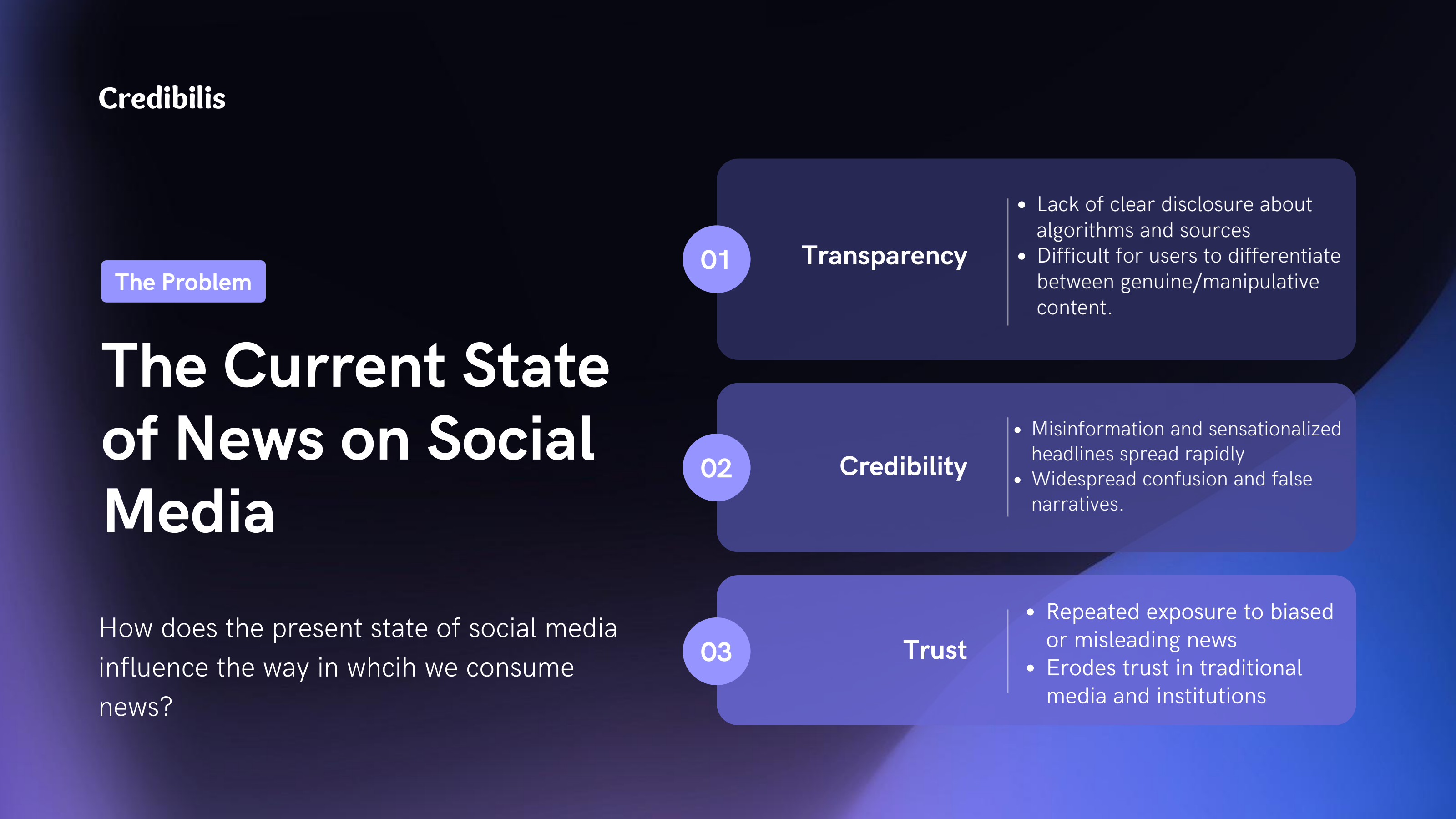
No clear disclosure of algorithms or sources, making it hard to tell genuine content from manipulative content.
Misinformation and sensational headlines spread faster than corrections, creating confusion and false narratives.
Repeated exposure to biased or misleading news erodes trust in media and institutions altogether.
Our mission was simple: change the way people consume news. We framed the product around a fictional product owner: a former investigative journalist turned tech-ethics advocate, whose goal was a transparent, open-source alternative that fosters critical thinking among 16–28 year olds.
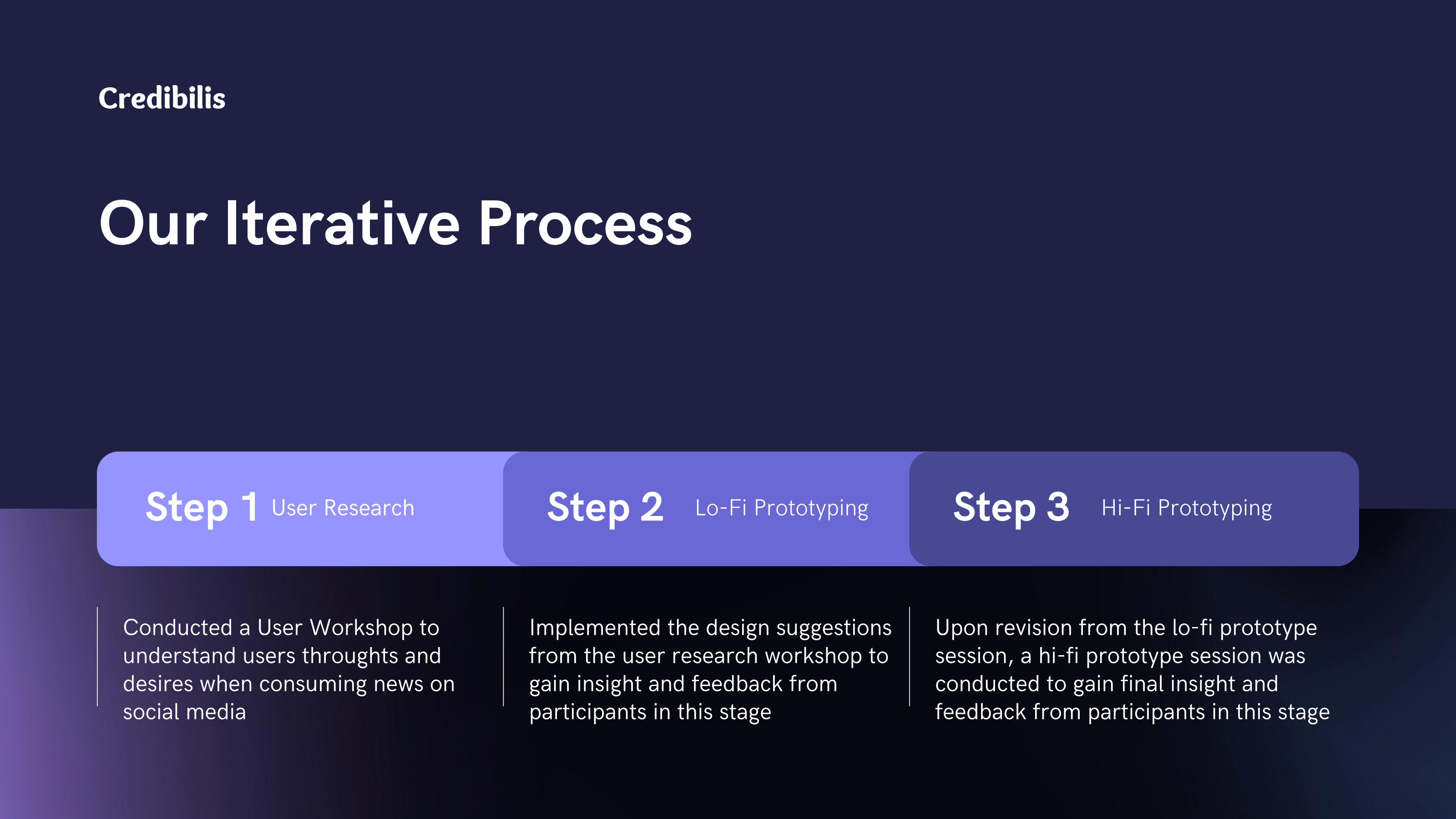
- 01UX research
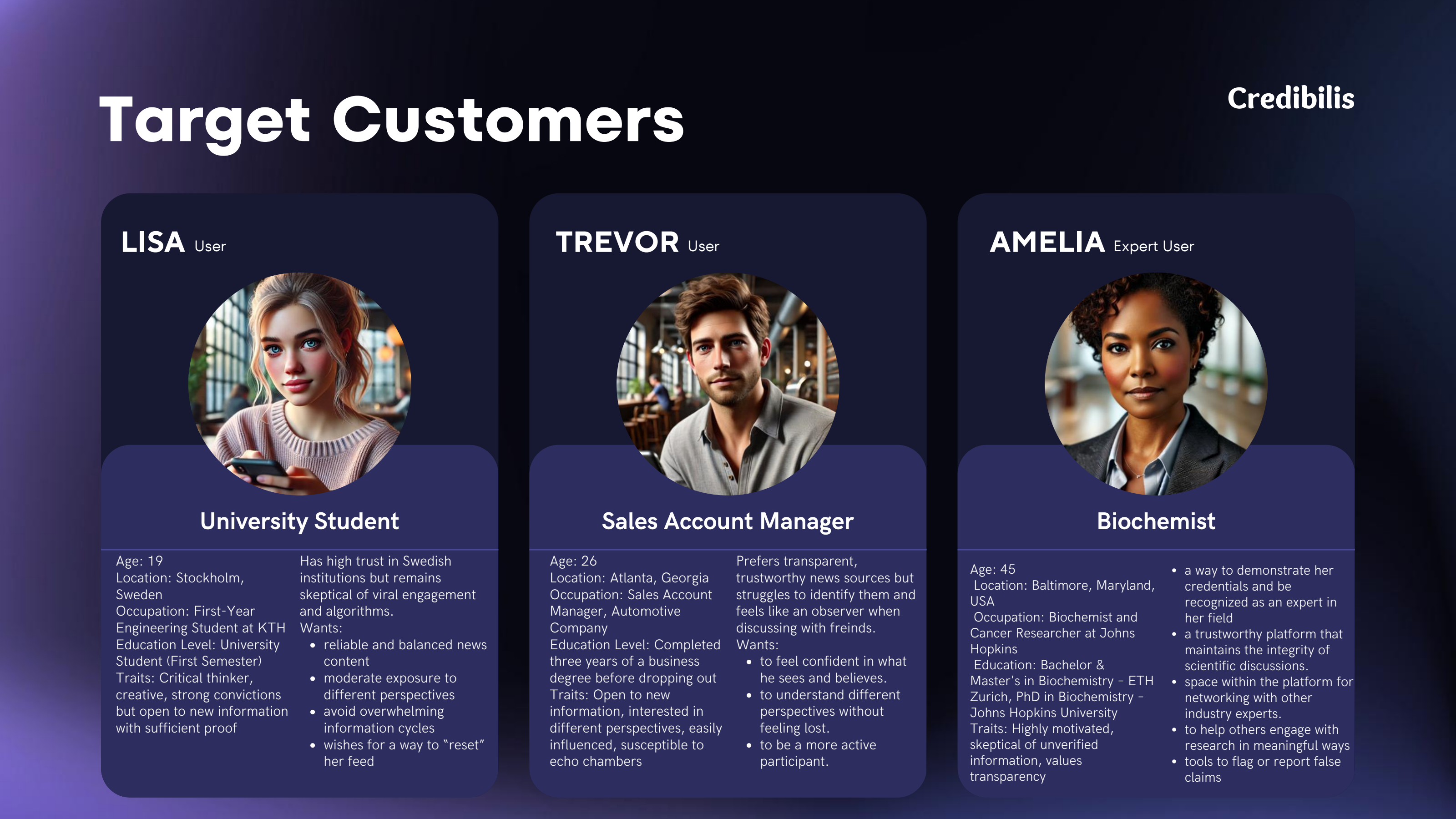
I led a user workshop exploring how people feel when they read news on social media: what they trust, what they doubt and what they wish they could control. From it we built three personas: Lisa, a 19-year-old KTH student who wants balanced news and a way to “reset” her feed; Trevor, a 26-year-old sales manager susceptible to echo chambers; and Amelia, a cancer researcher who wants to be recognised as an expert and flag false claims.
- 02Stakeholder & competitor mapping
We mapped primary, secondary and external stakeholders, from young readers and citizen journalists to fact-checking organisations and regulators, and treated indirect competitors as potential partners rather than rivals.
- 03Lo-fi prototyping
Workshop insights were turned straight into low-fidelity flows and tested with participants, letting us see which credibility cues people actually noticed and understood.
- 04Hi-fi prototyping
After revising from the lo-fi sessions, we built a high-fidelity prototype and ran a final round of feedback. I shaped the three core features: verification of who is posting, fact-checking with transparent credibility signals, and role-specific profiles.
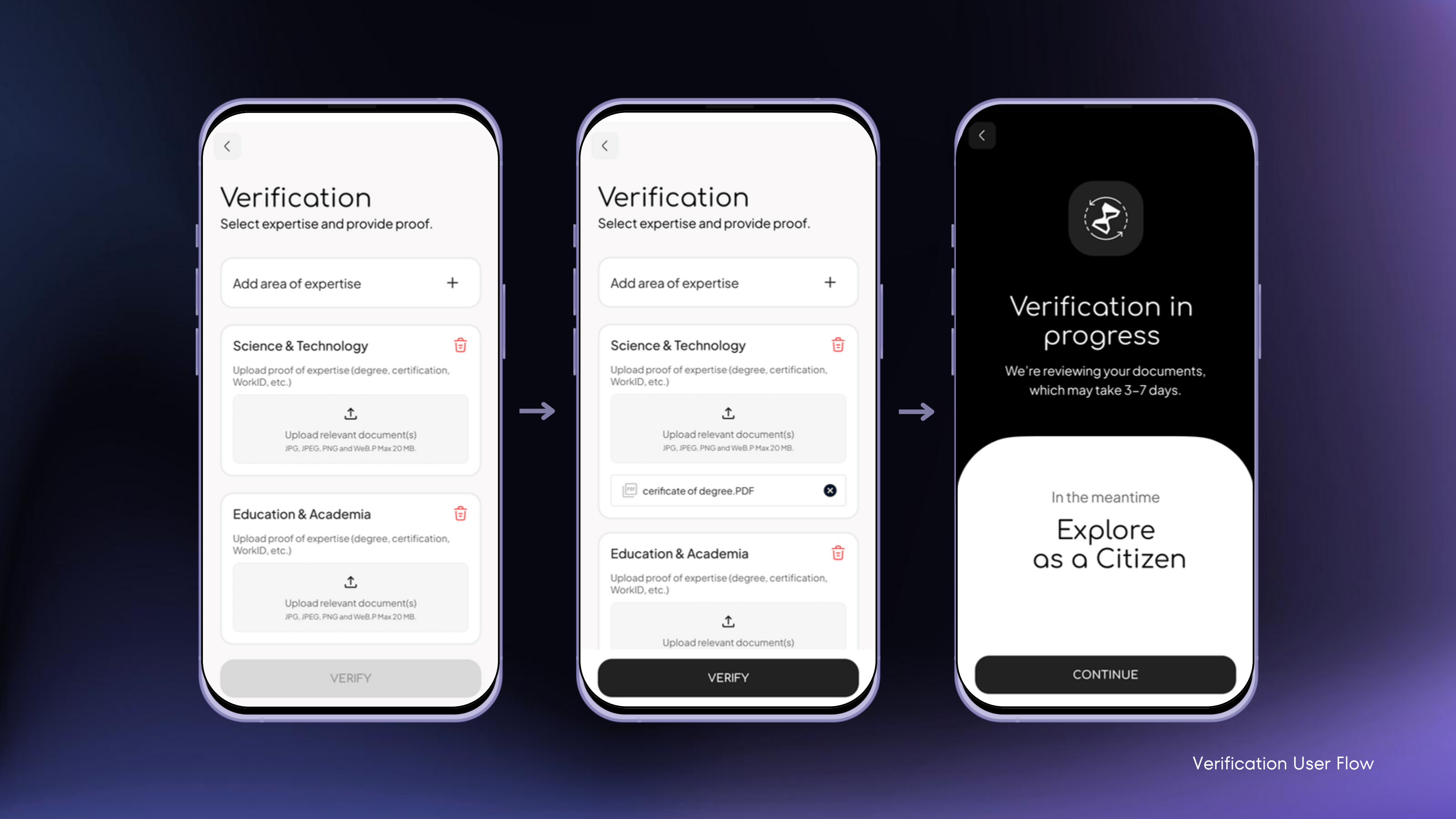
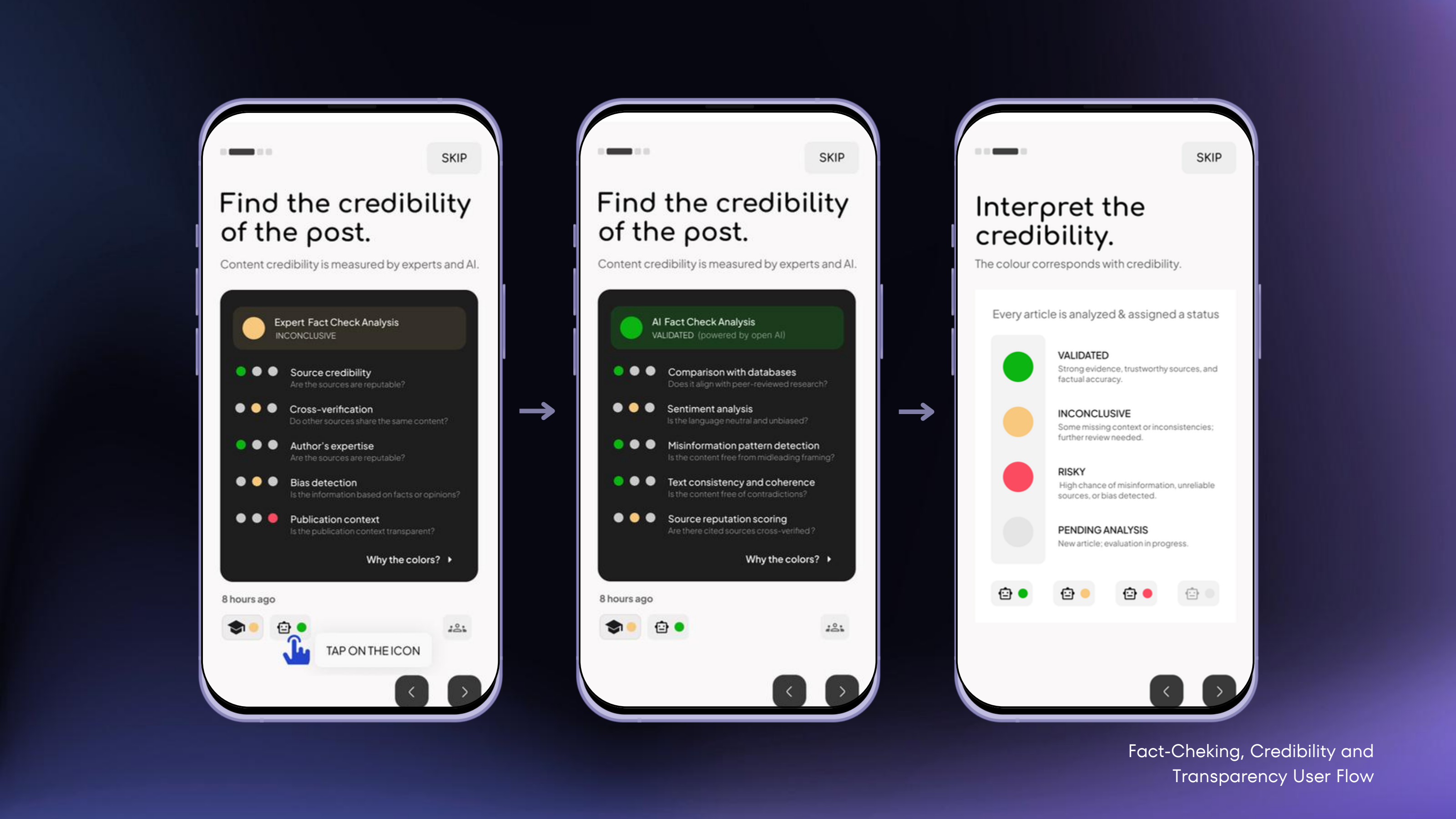
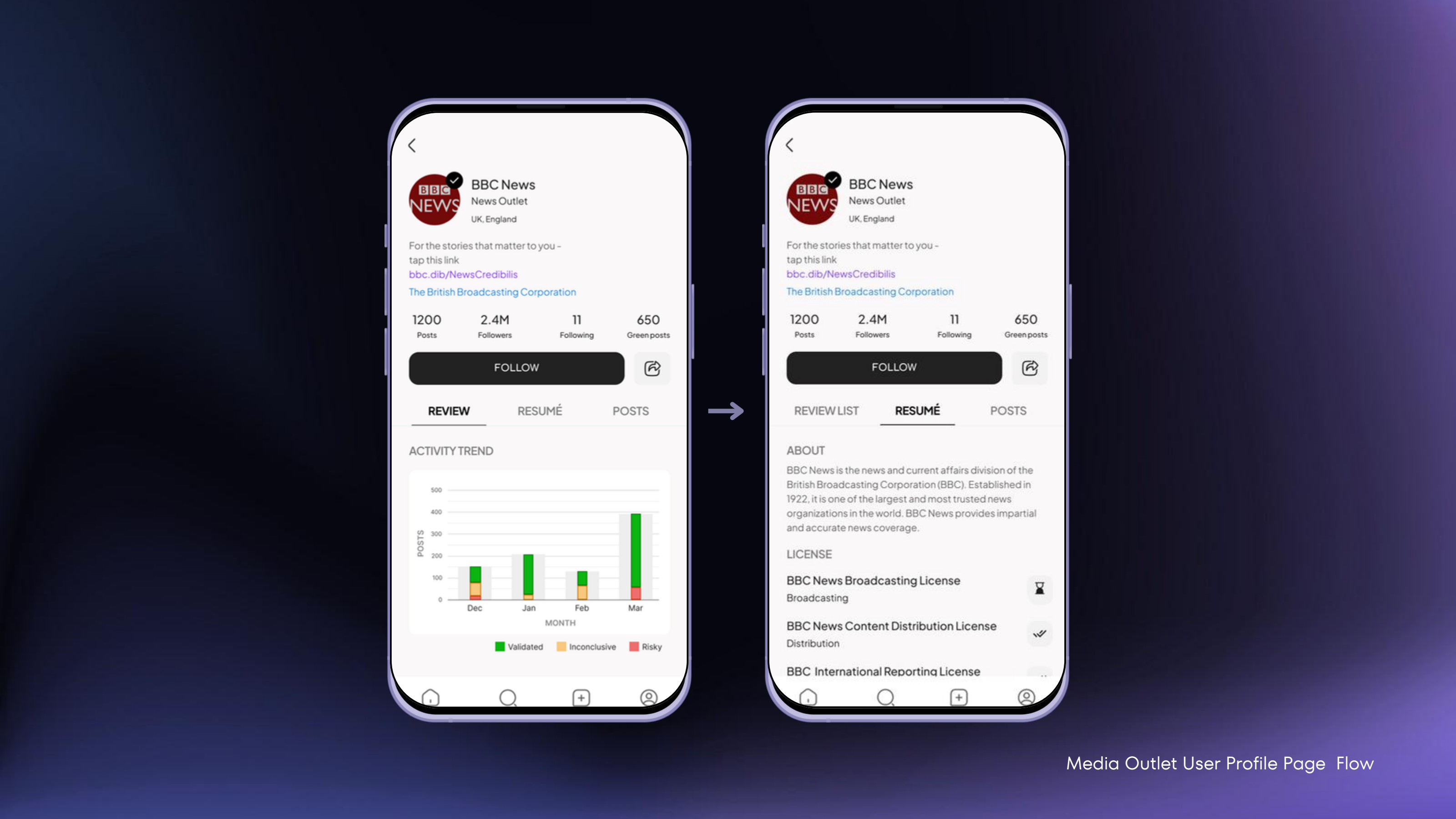
A news-first social app where trust is designed in, not bolted on.
- Verification: citizens, experts and news outlets choose a role; outlets provide ownership details, press credentials and registration proof.
- Fact-checking, credibility & transparency: a simple gesture reveals how credible a post is, measured by both experts and AI, with a guide to interpreting the score.
- Profile specification: expert and media-outlet profiles show credentials, licences and badges so readers know who they are listening to.
“Credibilis taught me that trust is an interaction problem. AI can help score content, but people only believe the score when they can see where it comes from. The explanation is the feature.”